


USC Mark and Mary Stevens Neuroimaging and Informatics Institute
Keck School of Medicine of USC
University of Southern California
323-44-BRAIN (323-442-7246)
About INI
About INI
Facilities
Core Resources
Contact
Contact us
Terms of Use
Privacy Policy
Powered by
INI
LONI
NIIN
CIC
CIA
IGC
License Agreement
People
News & Reports
People
Other Cool Stuff
Other Cool Stuff

Careers
Careers
Support the INI
Support Us

Subscribe to Newsletter
News & Reports



NEWSLETTER


New Funding
We are proud to announce that Director of the Neural Plasticity & Neurorehabilitation Lab, Sook-Lei Liew, PhD, OTR/L, FAOTA, has been awarded a prestigious NIH grant to further her work on brain health and sensorimotor recovery. This funding will support research exploring how global brain health influences rehabilitation outcomes, which could lead to more personalized and effective therapies for individuals recovering from stroke or other neurologic injury. Dr. Liew’s cutting-edge approaches combine AI, neuroimaging, modeling, and behavior to probe neural plasticity and transform how recovery is understood and promoted.
Dr. Liew has also received a new NIH grant to develop advanced data science tools that will revolutionize rehabilitation research. The Data Science and Analytics for Precision Rehabilitation (DAPR) Center is one of six Medical Rehabilitation Research Resource Centers nationwide. DAPR aims to integrate diverse rehabilitation datasets and use AI to forecast recovery outcomes for conditions like stroke, Parkinson’s disease, and cerebral palsy. By unifying data from around the globe and leveraging neuroinformatics tools, including those developed at the Stevens INI, DAPR will enable researchers to create larger, more sophisticated models of recovery.
NIH Grants Furthering Brain Health, Sensorimotor Recovery, and Rehabilitation Research
The fourth annual Fork It Alzheimer’s event, hosted by Daryl and Irwin Simon in partnership with the Alzheimer’s Association, recently brought more than 400 guests together to raise funds for Alzheimer’s prevention. Stevens INI Director Arthur W. Toga, PhD, attended the event, where the Simon family announced a $1 million award from the Fork It Fund to support the Global Alzheimer’s Association Interactive Network (GAAIN), our pioneering data-sharing platform created to accelerate discoveries worldwide.
Fork It Alzheimer’s
Over three generations, the Hoffman and Popovich families have made a transformative commitment to Parkinson’s research. Dr. Toga recently attended a luncheon to accept their $5 million gift, which establishes the Hoffman Foundation Endowed Chair in Neurodegenerative Diseases, bolstering the Stevens INI’s leadership in brain research. The new chair will accelerate breakthroughs in early detection, biomarkers, and collaborative data sharing—building on our deep archives and AI-enabled platforms.
Multi-Generational Giving Focuses on Parkinson’s
We used functional MRI and tau PET to examine how brain activity complexity changes in Alzheimer’s disease and its relationship to tau protein accumulation, a key marker of AD.
Alzheimer’s Disease
Peering into a petabyte of human brain data, our team visualized 130M+ synapses with stunning accuracy—revealing the dense, intricate reality of our neural networks.
A team led by Danny JJ Wang, PhD, has developed a groundbreaking MRI method to measure tiny vascular pulses in the brain—changes linked to aging and Alzheimer’s disease. This new method allows us to see, for the first time in people, how the volumes of tiny blood vessels in the brain change with aging and vascular risk factors.
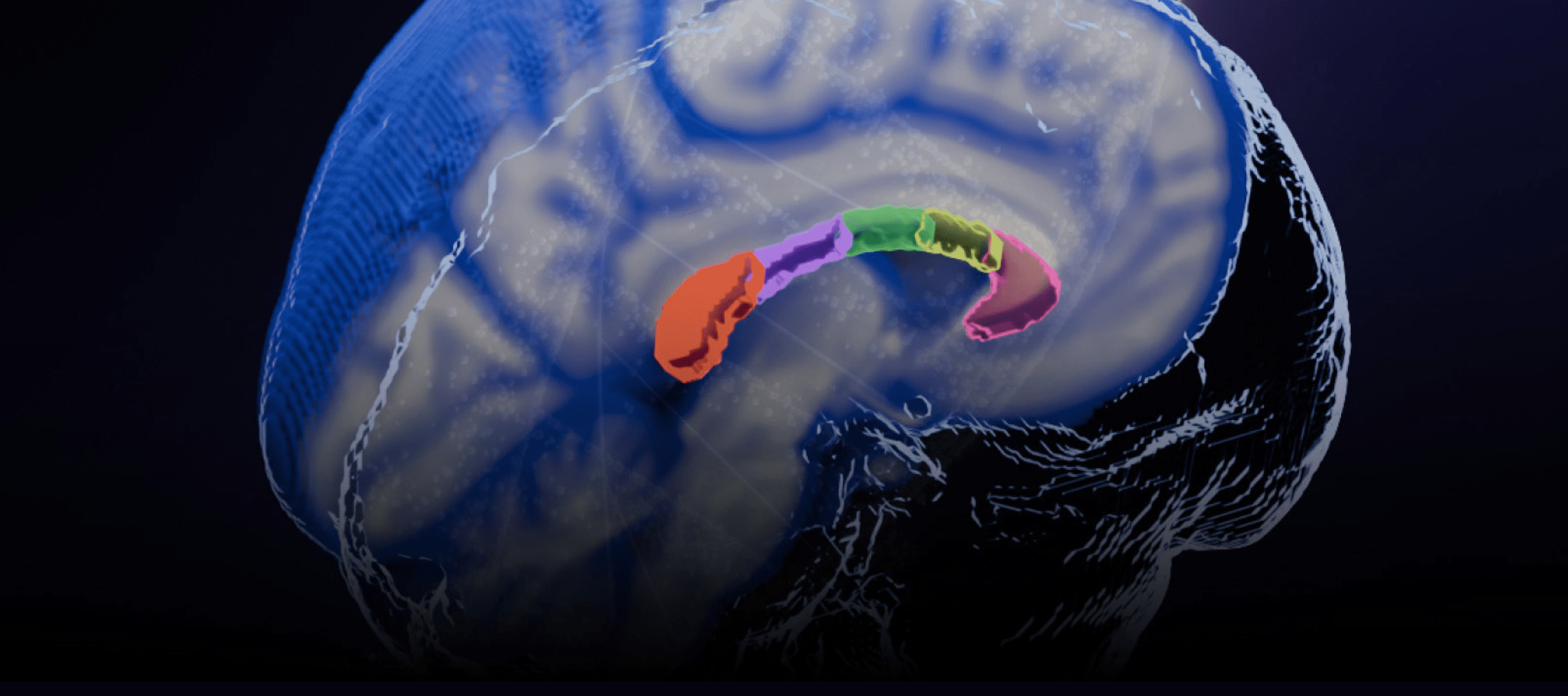
Co-first authors Neda Jahanshad, PhD, and Ravi Bhatt, PhD, have led an international study that, for the first time, mapped the genetic architecture of the human corpus callosum. The study analyzed brain scans and genetic data from over 50,000 people using an AI tool developed here at the Stevens INI. The team identified dozens of genetic regions that shape the corpus callosum and revealed connections to psychiatric and neurological conditions such as ADHD and bipolar disorder.
Publication Spotlight
Education
We recently welcomed a group of USC Bovard Scholars at the Institute. The visiting high school students toured our world-class imaging facilities, learned about cutting-edge brain research, and heard directly from our faculty about careers in neuroscience and informatics. The visit was part of the Bovard Scholars program’s mission to expand opportunity and inspire the next generation of leaders through academic enrichment and hands-on exposure to USC’s innovative research environment.
We hosted the final symposium of the Neurocognitive Aging & Analytics Research Education (NAARE) program, a multi-year partnership with California State University, Fullerton. The event brought together students and faculty to showcase research projects exploring the intersection of neuroscience, aging, and data science. We want to express our deep gratitude to the NAARE community for its commitment to fostering diversity in research and providing invaluable training opportunities for emerging scholars. We are proud of the program’s impact and look forward to seeing how its alumni continue to advance the field.
Fall 2025
Recent Visualizations
KUDOS!
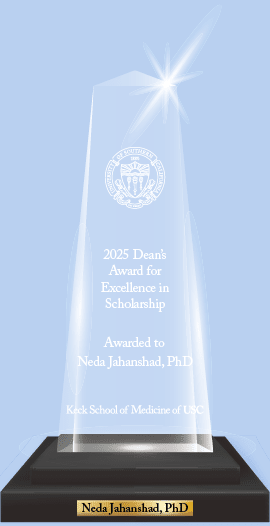
Congratulations to Neda Jahanshad, PhD, on being honored with the Keck School of Medicine Dean’s Award for Excellence in Scholarship, recognizing her outstanding research achievements and global impact in the fields of imaging genetics and brain mapping. This prestigious award celebrates her leadership in advancing large-scale, collaborative neuroscience and her commitment to engaging colleagues worldwide in scholarly work.
Paul M. Thompson, PhD, recently delivered the Presidential Keynote Lecture at the American Society of Functional Neuroradiology (ASFNR) Annual Meeting in Austin, Texas. He discussed how AI is transforming neuroscience and radiology, from diagnosing brain disorders and predicting outcomes to drafting radiology reports and answering questions about MRI scans. You can see a version of that lecture by clicking below.
Danny JJ Wang, PhD, has published a new book titled Imaging Blood-Brain Barrier Dysfunction in Brain Disorders. Released on November 1, 2025, the first-edition volume offers a comprehensive exploration of the blood-brain barrier’s (BBB) role in health and in conditions such as stroke, Alzheimer’s disease, traumatic brain injury, cerebral small vessel disease, and sleep apnea. It highlights advanced imaging techniques, especially MRI, to visualize BBB function and dysfunction in vivo. It underscores the critical role of BBB imaging in early detection, monitoring, and treatment of neurological disorders.
Sook-Lei Liew, PhD, OTR/L, FAOTA
Lauren Salminen, PhD
Lauren Salminen, PhD, was invited to AirTalk to discuss her work and findings from a recent epidemiological study on air pollution and dementia. Listen to her segment starting around minute 18.

Danny JJ Wang, PhD


USC Bovard Scholars


Shape Analysis
Using advanced subcortical shape analysis, we found brain alterations associated with schizophrenia, which may help us better understand brain features related to the genetic condition.

USC Mark and
Mary Stevens
Neuroimaging
and Informatics
Institute
In This Issue

New Funding
Publications Spotlight
KUDOS!
Education
Recent Visualizations


USC Mark and Mary Stevens Neuroimaging and Informatics Institute
Keck School of Medicine of USC
University of Southern California
323-44-BRAIN (323-442-7246)
About INI
About INI
Facilities
Core Resources
Contact
Contact us
Terms of Use
Privacy Policy
Powered by
INI
LONI
NIIN
CIC
CIA
IGC
License Agreement
People
News & Reports
People
Other Cool Stuff
Other Cool Stuff
Careers
Careers
Support the INI
Support Us
Subscribe to Newsletter
News & Reports



NEWSLETTER
New Funding
We are proud to announce that Director of the Neural Plasticity & Neurorehabilitation Lab, Sook-Lei Liew, PhD, OTR/L, FAOTA, has been awarded a prestigious NIH grant to further her work on brain health and sensorimotor recovery. This funding will support research exploring how global brain health influences rehabilitation outcomes, which could lead to more personalized and effective therapies for individuals recovering from stroke or other neurologic injury. Dr. Liew’s cutting-edge approaches combine AI, neuroimaging, modeling, and behavior to probe neural plasticity and transform how recovery is understood and promoted.
Dr. Liew has also received a new NIH grant to develop advanced data science tools that will revolutionize rehabilitation research. The Data Science and Analytics for Precision Rehabilitation (DAPR) Center is one of six Medical Rehabilitation Research Resource Centers nationwide. DAPR aims to integrate diverse rehabilitation datasets and use AI to forecast recovery outcomes for conditions like stroke, Parkinson’s disease, and cerebral palsy. By unifying data from around the globe and leveraging neuroinformatics tools, including those developed at the Stevens INI, DAPR will enable researchers to create larger, more sophisticated models of recovery.
NIH Grants Furthering Brain Health, Sensorimotor Recovery, and Rehabilitation Research
Multi-Generational Giving Focuses on Parkinson’s
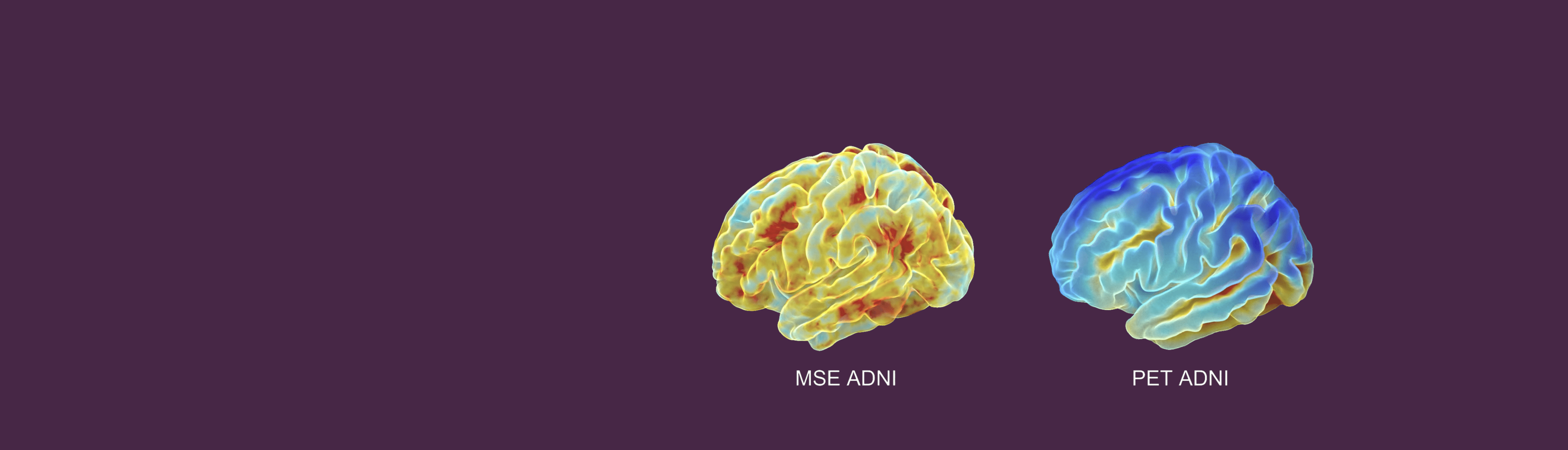
We used functional MRI and tau PET to examine how brain activity complexity changes in Alzheimer’s disease and its relationship to tau protein accumulation, a key marker of AD.
Alzheimer’s Disease
Peering into a petabyte of human brain data, our team visualized 130M+ synapses with stunning accuracy—revealing the dense, intricate reality of our neural networks.
A team led by Danny JJ Wang, PhD, has developed a groundbreaking MRI method to measure tiny vascular pulses in the brain—changes linked to aging and Alzheimer’s disease. This new method allows us to see, for the first time in people, how the volumes of tiny blood vessels in the brain change with aging and vascular risk factors.
Co-first authors Neda Jahanshad, PhD, and Ravi Bhatt, PhD, have led an international study that, for the first time, mapped the genetic architecture of the human corpus callosum. The study analyzed brain scans and genetic data from over 50,000 people using an AI tool developed here at the Stevens INI. The team identified dozens of genetic regions that shape the corpus callosum and revealed connections to psychiatric and neurological conditions such as ADHD and bipolar disorder.
Publication Spotlight
Education
We recently welcomed a group of USC Bovard Scholars at the Institute. The visiting high school students toured our world-class imaging facilities, learned about cutting-edge brain research, and heard directly from our faculty about careers in neuroscience and informatics. The visit was part of the Bovard Scholars program’s mission to expand opportunity and inspire the next generation of leaders through academic enrichment and hands-on exposure to USC’s innovative research environment.
We hosted the final symposium of the Neurocognitive Aging & Analytics Research Education (NAARE) program, a multi-year partnership with California State University, Fullerton. The event brought together students and faculty to showcase research projects exploring the intersection of neuroscience, aging, and data science. We want to express our deep gratitude to the NAARE community for its commitment to fostering diversity in research and providing invaluable training opportunities for emerging scholars. We are proud of the program’s impact and look forward to seeing how its alumni continue to advance the field.
Fall 2025
Recent Visualizations
Sook-Lei Liew, PhD, OTR/L, FAOTA
USC Bovard Scholars
Shape Analysis
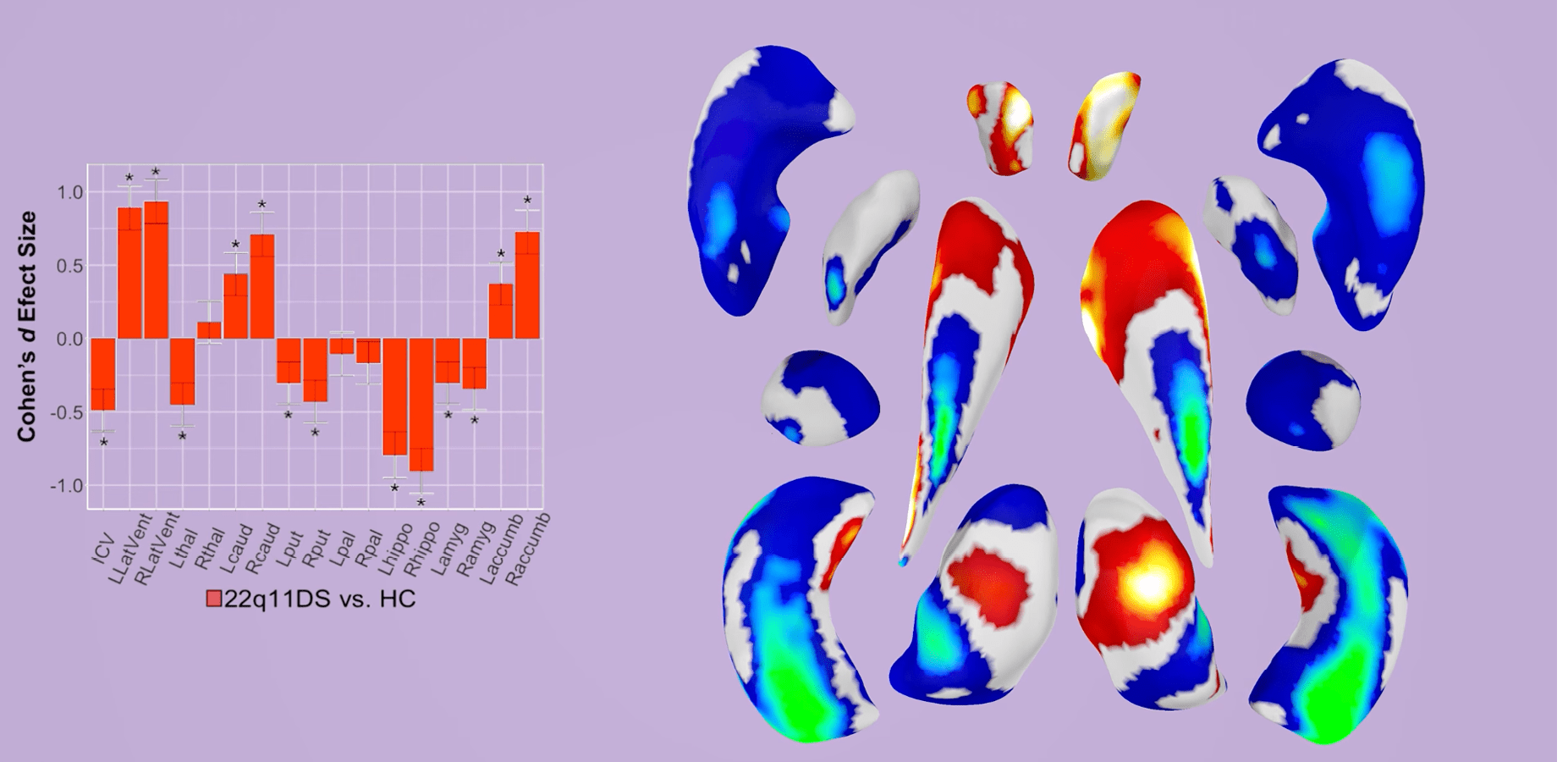
Using advanced subcortical shape analysis, we found brain alterations associated with schizophrenia, which may help us better understand brain features related to the genetic condition.


KUDOS!
Lauren Salminen, PhD, was invited to AirTalk to discuss her work and findings from a recent epidemiological study on air pollution and dementia. Listen to her segment starting around minute 18.

Danny JJ Wang, PhD


Danny JJ Wang, PhD, has published a new book titled Imaging Blood-Brain Barrier Dysfunction in Brain Disorders. Released on November 1, 2025, the first-edition volume offers a comprehensive exploration of the blood-brain barrier’s (BBB) role in health and in conditions such as stroke, Alzheimer’s disease, traumatic brain injury, cerebral small vessel disease, and sleep apnea. It highlights advanced imaging techniques, especially MRI, to visualize BBB function and dysfunction in vivo. It underscores the critical role of BBB imaging in early detection, monitoring, and treatment of neurological disorders.

Paul M. Thompson, PhD, recently delivered the Presidential Keynote Lecture at the American Society of Functional Neuroradiology (ASFNR) Annual Meeting in Austin, Texas. He discussed how AI is transforming neuroscience and radiology, from diagnosing brain disorders and predicting outcomes to drafting radiology reports and answering questions about MRI scans. You can see a version of that lecture by clicking below.
Congratulations to Neda Jahanshad, PhD, on being honored with the Keck School of Medicine Dean’s Award for Excellence in Scholarship, recognizing her outstanding research achievements and global impact in the fields of imaging genetics and brain mapping. This prestigious award celebrates her leadership in advancing large-scale, collaborative neuroscience and her commitment to engaging colleagues worldwide in scholarly work.
Dean’s Award for Excellence in Scholarship to Neda Jahanshad, PhD
USC Mark and
Mary Stevens
Neuroimaging
and Informatics
Institute
The fourth annual Fork It Alzheimer’s event, hosted by Daryl and Irwin Simon in partnership with the Alzheimer’s Association, recently brought more than 400 guests together to raise funds for Alzheimer’s prevention. Stevens INI Director Arthur W. Toga, PhD, attended the event, where the Simon family announced a $1 million award from the Fork It Fund to support the Global Alzheimer’s Association Interactive Network (GAAIN), our pioneering data-sharing platform created to accelerate discoveries worldwide.
Fork It Alzheimer’s
Over three generations, the Hoffman and Popovich families have made a transformative commitment to Parkinson’s research. Dr. Toga recently attended a luncheon to accept their $5 million gift, which establishes the Hoffman Foundation Endowed Chair in Neurodegenerative Diseases, bolstering the Stevens INI’s leadership in brain research. The new chair will accelerate breakthroughs in early detection, biomarkers, and collaborative data sharing—building on our deep archives and AI-enabled platforms.
In This Issue
New Funding
Publications Spotlight
KUDOS!
Education
Recent Visualizations


USC Stevens Neuroimaging and Informatics Institute
Keck School of Medicine of USC
University of Southern California
323-44-BRAIN (323-442-7246)
About INI
About INI
Facilities
Core Resources
Contact
Contact us
Terms of Use
Privacy Policy
Powered by
INI
LONI
NIIN
CIC
CIA
IGC
License Agreement
People
News & Reports
People
Other Cool Stuff
Other Cool Stuff
Careers
Careers
Support the INI
Support Us
Subscribe to Newsletter
News & Reports


NEWSLETTER
New Funding
We are proud to announce that Director of the Neural Plasticity & Neurorehabilitation Lab, Sook-Lei Liew, PhD, OTR/L, FAOTA, has been awarded a prestigious NIH grant to further her work on brain health and sensorimotor recovery. This funding will support research exploring how global brain health influences rehabilitation outcomes, which could lead to more personalized and effective therapies for individuals recovering from stroke or other neurologic injury. Dr. Liew’s cutting-edge approaches combine AI, neuroimaging, modeling, and behavior to probe neural plasticity and transform how recovery is understood and promoted.
Dr. Liew has also received a new NIH grant to develop advanced data science tools that will revolutionize rehabilitation research. The Data Science and Analytics for Precision Rehabilitation (DAPR) Center is one of six Medical Rehabilitation Research Resource Centers nationwide. DAPR aims to integrate diverse rehabilitation datasets and use AI to forecast recovery outcomes for conditions like stroke, Parkinson’s disease, and cerebral palsy. By unifying data from around the globe and leveraging neuroinformatics tools, including those developed at the Stevens INI, DAPR will enable researchers to create larger, more sophisticated models of recovery.
NIH Grants Furthering Brain Health, Sensorimotor Recovery, and Rehabilitation Research
Fork It Alzheimer’s
Multi-Generational Giving Focuses on Parkinson’s
We used functional MRI and tau PET to examine how brain activity complexity changes in Alzheimer’s disease and its relationship to tau protein accumulation, a key marker of AD.
Alzheimer’s Disease
Peering into a petabyte of human brain data, our team visualized 130M+ synapses with stunning accuracy—revealing the dense, intricate reality of our neural networks.
A team led by Danny JJ Wang, PhD, has developed a groundbreaking MRI method to measure tiny vascular pulses in the brain—changes linked to aging and Alzheimer’s disease. This new method allows us to see, for the first time in people, how the volumes of tiny blood vessels in the brain change with aging and vascular risk factors.
Co-first authors Neda Jahanshad, PhD, and Ravi Bhatt, PhD, have led an international study that, for the first time, mapped the genetic architecture of the human corpus callosum. The study analyzed brain scans and genetic data from over 50,000 people using an AI tool developed here at the Stevens INI. The team identified dozens of genetic regions that shape the corpus callosum and revealed connections to psychiatric and neurological conditions such as ADHD and bipolar disorder.
Publication Spotlight
Education
We recently welcomed a group of USC Bovard Scholars at the Institute. The visiting high school students toured our world-class imaging facilities, learned about cutting-edge brain research, and heard directly from our faculty about careers in neuroscience and informatics. The visit was part of the Bovard Scholars program’s mission to expand opportunity and inspire the next generation of leaders through academic enrichment and hands-on exposure to USC’s innovative research environment.
We hosted the final symposium of the Neurocognitive Aging & Analytics Research Education (NAARE) program, a multi-year partnership with California State University, Fullerton. The event brought together students and faculty to showcase research projects exploring the intersection of neuroscience, aging, and data science. We want to express our deep gratitude to the NAARE community for its commitment to fostering diversity in research and providing invaluable training opportunities for emerging scholars. We are proud of the program’s impact and look forward to seeing how its alumni continue to advance the field.
Fall 2025
Recent Visualizations
KUDOS!
Congratulations to Neda Jahanshad, PhD, on being honored with the Keck School of Medicine Dean’s Award for Excellence in Scholarship, recognizing her outstanding research achievements and global impact in the fields of imaging genetics and brain mapping. This prestigious award celebrates her leadership in advancing large-scale, collaborative neuroscience and her commitment to engaging colleagues worldwide in scholarly work.
Paul M. Thompson, PhD, recently delivered the Presidential Keynote Lecture at the American Society of Functional Neuroradiology (ASFNR) Annual Meeting in Austin, Texas. He discussed how AI is transforming neuroscience and radiology, from diagnosing brain disorders and predicting outcomes to drafting radiology reports and answering questions about MRI scans. You can see a version of that lecture by clicking below.
Danny JJ Wang, PhD, has published a new book titled Imaging Blood-Brain Barrier Dysfunction in Brain Disorders. Released on November 1, 2025, the first-edition volume offers a comprehensive exploration of the blood-brain barrier’s (BBB) role in health and in conditions such as stroke, Alzheimer’s disease, traumatic brain injury, cerebral small vessel disease, and sleep apnea. It highlights advanced imaging techniques, especially MRI, to visualize BBB function and dysfunction in vivo. It underscores the critical role of BBB imaging in early detection, monitoring, and treatment of neurological disorders.
Sook-Lei Liew, PhD, OTR/L, FAOTA
Lauren Salminen, PhD
Lauren Salminen, PhD, was invited to AirTalk to discuss her work and findings from a recent epidemiological study on air pollution and dementia. Listen to her segment starting around minute 18.

Danny JJ Wang, PhD


USC Bovard Scholars


Shape Analysis
Using advanced subcortical shape analysis, we found brain alterations associated with schizophrenia, which may help us better understand brain features related to the genetic condition.

USC Mark and
Mary Stevens
Neuroimaging
and Informatics
Institute
The fourth annual Fork It Alzheimer’s event, hosted by Daryl and Irwin Simon in partnership with the Alzheimer’s Association, recently brought more than 400 guests together to raise funds for Alzheimer’s prevention. Stevens INI Director Arthur W. Toga, PhD, attended the event, where the Simon family announced a $1 million award from the Fork It Fund to support the Global Alzheimer’s Association Interactive Network (GAAIN), our pioneering data-sharing platform created to accelerate discoveries worldwide.
Over three generations, the Hoffman and Popovich families have made a transformative commitment to Parkinson’s research. Dr. Toga recently attended a luncheon to accept their $5 million gift, which establishes the Hoffman Foundation Endowed Chair in Neurodegenerative Diseases, bolstering the Stevens INI’s leadership in brain research. The new chair will accelerate breakthroughs in early detection, biomarkers, and collaborative data sharing—building on our deep archives and AI-enabled platforms.
In This Issue
New Funding
Publications Spotlight
KUDOS!
Education
Recent Visualizations

USC Stevens Neuroimaging and Informatics Institute
Keck School of Medicine of USC
University of Southern California
323-44-BRAIN (323-442-7246)
About INI
About INI
Facilities
Core Resources
Contact
Contact us
Terms of Use
Privacy Policy
Powered by
INI
LONI
NIIN
CIC
CIA
IGC
License Agreement
People
News & Reports
People
Other Cool Stuff
Other Cool Stuff
Careers
Careers
Support the INI
Support Us
Subscribe to Newsletter
News & Reports


NEWSLETTER
New Funding
We are proud to announce that Director of the Neural Plasticity & Neurorehabilitation Lab, Sook-Lei Liew, PhD, OTR/L, FAOTA, has been awarded a prestigious NIH grant to further her work on brain health and sensorimotor recovery. This funding will support research exploring how global brain health influences rehabilitation outcomes, which could lead to more personalized and effective therapies for individuals recovering from stroke or other neurologic injury. Dr. Liew’s cutting-edge approaches combine AI, neuroimaging, modeling, and behavior to probe neural plasticity and transform how recovery is understood and promoted.
Dr. Liew has also received a new NIH grant to develop advanced data science tools that will revolutionize rehabilitation research. The Data Science and Analytics for Precision Rehabilitation (DAPR) Center is one of six Medical Rehabilitation Research Resource Centers nationwide. DAPR aims to integrate diverse rehabilitation datasets and use AI to forecast recovery outcomes for conditions like stroke, Parkinson’s disease, and cerebral palsy. By unifying data from around the globe and leveraging neuroinformatics tools, including those developed at the Stevens INI, DAPR will enable researchers to create larger, more sophisticated models of recovery.
NIH Grants Furthering Brain Health, Sensorimotor Recovery, and Rehabilitation Research
Fork It Alzheimer’s
Multi-Generational Giving Focuses on Parkinson’s
We used functional MRI and tau PET to examine how brain activity complexity changes in Alzheimer’s disease and its relationship to tau protein accumulation, a key marker of AD.
Alzheimer’s Disease
Peering into a petabyte of human brain data, our team visualized 130M+ synapses with stunning accuracy—revealing the dense, intricate reality of our neural networks.
A team led by Danny JJ Wang, PhD, has developed a groundbreaking MRI method to measure tiny vascular pulses in the brain—changes linked to aging and Alzheimer’s disease. This new method allows us to see, for the first time in people, how the volumes of tiny blood vessels in the brain change with aging and vascular risk factors.
Co-first authors Neda Jahanshad, PhD, and Ravi Bhatt, PhD, have led an international study that, for the first time, mapped the genetic architecture of the human corpus callosum. The study analyzed brain scans and genetic data from over 50,000 people using an AI tool developed here at the Stevens INI. The team identified dozens of genetic regions that shape the corpus callosum and revealed connections to psychiatric and neurological conditions such as ADHD and bipolar disorder.
Publication Spotlight
Education
We recently welcomed a group of USC Bovard Scholars at the Institute. The visiting high school students toured our world-class imaging facilities, learned about cutting-edge brain research, and heard directly from our faculty about careers in neuroscience and informatics. The visit was part of the Bovard Scholars program’s mission to expand opportunity and inspire the next generation of leaders through academic enrichment and hands-on exposure to USC’s innovative research environment.
We hosted the final symposium of the Neurocognitive Aging & Analytics Research Education (NAARE) program, a multi-year partnership with California State University, Fullerton. The event brought together students and faculty to showcase research projects exploring the intersection of neuroscience, aging, and data science. We want to express our deep gratitude to the NAARE community for its commitment to fostering diversity in research and providing invaluable training opportunities for emerging scholars. We are proud of the program’s impact and look forward to seeing how its alumni continue to advance the field.
Fall 2025
Recent Visualizations
KUDOS!
Congratulations to Neda Jahanshad, PhD, on being honored with the Keck School of Medicine Dean’s Award for Excellence in Scholarship, recognizing her outstanding research achievements and global impact in the fields of imaging genetics and brain mapping. This prestigious award celebrates her leadership in advancing large-scale, collaborative neuroscience and her commitment to engaging colleagues worldwide in scholarly work.
Paul M. Thompson, PhD, recently delivered the Presidential Keynote Lecture at the American Society of Functional Neuroradiology (ASFNR) Annual Meeting in Austin, Texas. He discussed how AI is transforming neuroscience and radiology, from diagnosing brain disorders and predicting outcomes to drafting radiology reports and answering questions about MRI scans. You can see a version of that lecture by clicking below.
Danny JJ Wang, PhD, has published a new book titled Imaging Blood-Brain Barrier Dysfunction in Brain Disorders. Released on November 1, 2025, the first-edition volume offers a comprehensive exploration of the blood-brain barrier’s (BBB) role in health and in conditions such as stroke, Alzheimer’s disease, traumatic brain injury, cerebral small vessel disease, and sleep apnea. It highlights advanced imaging techniques, especially MRI, to visualize BBB function and dysfunction in vivo. It underscores the critical role of BBB imaging in early detection, monitoring, and treatment of neurological disorders.
Sook-Lei Liew, PhD, OTR/L, FAOTA
Lauren Salminen, PhD
Lauren Salminen, PhD, was invited to AirTalk to discuss her work and findings from a recent epidemiological study on air pollution and dementia. Listen to her segment starting around minute 18.

Danny JJ Wang, PhD


USC Bovard Scholars


Shape Analysis
Using advanced subcortical shape analysis, we found brain alterations associated with schizophrenia, which may help us better understand brain features related to the genetic condition.


USC Mark and
Mary Stevens
Neuroimaging
and Informatics
Institute
The fourth annual Fork It Alzheimer’s event, hosted by Daryl and Irwin Simon in partnership with the Alzheimer’s Association, recently brought more than 400 guests together to raise funds for Alzheimer’s prevention. Stevens INI Director Arthur W. Toga, PhD, attended the event, where the Simon family announced a $1 million award from the Fork It Fund to support the Global Alzheimer’s Association Interactive Network (GAAIN), our pioneering data-sharing platform created to accelerate discoveries worldwide.
Over three generations, the Hoffman and Popovich families have made a transformative commitment to Parkinson’s research. Dr. Toga recently attended a luncheon to accept their $5 million gift, which establishes the Hoffman Foundation Endowed Chair in Neurodegenerative Diseases, bolstering the Stevens INI’s leadership in brain research. The new chair will accelerate breakthroughs in early detection, biomarkers, and collaborative data sharing—building on our deep archives and AI-enabled platforms.

USC Stevens Neuroimaging and Informatics Institute
Keck School of Medicine of USC
University of Southern California
323-44-BRAIN (323-442-7246)
About INI
About INI
Facilities
Core Resources
Contact
Contact us
Terms of Use
Privacy Policy
Powered by
INI
LONI
NIIN
CIC
CIA
IGC
License Agreement
People
News & Reports
People
Other Cool Stuff
Other Cool Stuff

Careers
Careers
Support the INI
Support Us

Subscribe to Newsletter
News & Reports


LETTER
New Funding
We are proud to announce that Director of the Neural Plasticity & Neurorehabilitation Lab, Sook-Lei Liew, PhD, OTR/L, FAOTA, has been awarded a prestigious NIH grant to further her work on brain health and sensorimotor recovery. This funding will support research exploring how global brain health influences rehabilitation outcomes, which could lead to more personalized and effective therapies for individuals recovering from stroke or other neurologic injury. Dr. Liew’s cutting-edge approaches combine AI, neuroimaging, modeling, and behavior to probe neural plasticity and transform how recovery is understood and promoted.
Dr. Liew has also received a new NIH grant to develop advanced data science tools that will revolutionize rehabilitation research. The Data Science and Analytics for Precision Rehabilitation (DAPR) Center is one of six Medical Rehabilitation Research Resource Centers nationwide. DAPR aims to integrate diverse rehabilitation datasets and use AI to forecast recovery outcomes for conditions like stroke, Parkinson’s disease, and cerebral palsy. By unifying data from around the globe and leveraging neuroinformatics tools, including those developed at the Stevens INI, DAPR will enable researchers to create larger, more sophisticated models of recovery.
NIH Grants Furthering Brain Health, Sensorimotor Recovery, and Rehabilitation Research
Fork It Alzheimer’s
Multi-Generational Giving Focuses on Parkinson’s
We used functional MRI and tau PET to examine how brain activity complexity changes in Alzheimer’s disease and its relationship to tau protein accumulation, a key marker of AD.
Alzheimer’s Disease
Peering into a petabyte of human brain data, our team visualized 130M+ synapses with stunning accuracy—revealing the dense, intricate reality of our neural networks.

Co-first authors Neda Jahanshad, PhD, and Ravi Bhatt, PhD, have led an international study that, for the first time, mapped the genetic architecture of the human corpus callosum. The study analyzed brain scans and genetic data from over 50,000 people using an AI tool developed here at the Stevens INI. The team identified dozens of genetic regions that shape the corpus callosum and revealed connections to psychiatric and neurological conditions such as ADHD and bipolar disorder.
Publication Spotlight
Education
We recently welcomed a group of USC Bovard Scholars at the Institute. The visiting high school students toured our world-class imaging facilities, learned about cutting-edge brain research, and heard directly from our faculty about careers in neuroscience and informatics. The visit was part of the Bovard Scholars program’s mission to expand opportunity and inspire the next generation of leaders through academic enrichment and hands-on exposure to USC’s innovative research environment.
We hosted the final symposium of the Neurocognitive Aging & Analytics Research Education (NAARE) program, a multi-year partnership with California State University, Fullerton. The event brought together students and faculty to showcase research projects exploring the intersection of neuroscience, aging, and data science. We want to express our deep gratitude to the NAARE community for its commitment to fostering diversity in research and providing invaluable training opportunities for emerging scholars. We are proud of the program’s impact and look forward to seeing how its alumni continue to advance the field.
Fall 2025
Recent Visualizations
KUDOS!
Congratulations to Neda Jahanshad, PhD, on being honored with the Keck School of Medicine Dean’s Award for Excellence in Scholarship, recognizing her outstanding research achievements and global impact in the fields of imaging genetics and brain mapping. This prestigious award celebrates her leadership in advancing large-scale, collaborative neuroscience and her commitment to engaging colleagues worldwide in scholarly work.
Paul M. Thompson, PhD, recently delivered the Presidential Keynote Lecture at the American Society of Functional Neuroradiology (ASFNR) Annual Meeting in Austin, Texas. He discussed how AI is transforming neuroscience and radiology, from diagnosing brain disorders and predicting outcomes to drafting radiology reports and answering questions about MRI scans. You can see a version of that lecture by clicking below.
Danny JJ Wang, PhD, has published a new book titled Imaging Blood-Brain Barrier Dysfunction in Brain Disorders. Released on November 1, 2025, the first-edition volume offers a comprehensive exploration of the blood-brain barrier’s (BBB) role in health and in conditions such as stroke, Alzheimer’s disease, traumatic brain injury, cerebral small vessel disease, and sleep apnea. It highlights advanced imaging techniques, especially MRI, to visualize BBB function and dysfunction in vivo. It underscores the critical role of BBB imaging in early detection, monitoring, and treatment of neurological disorders.
Sook-Lei Liew, PhD, OTR/L, FAOTA
Lauren Salminen, PhD, was invited to AirTalk to discuss her work and findings from a recent epidemiological study on air pollution and dementia. Listen to her segment starting around minute 18.


USC Bovard Scholars


Shape Analysis
Using advanced subcortical shape analysis, we found brain alterations associated with schizophrenia, which may help us better understand brain features related to the genetic condition.

USC Mark and Mary Stevens Neuroimaging and Informatics Institute
The fourth annual Fork It Alzheimer’s event, hosted by Daryl and Irwin Simon in partnership with the Alzheimer’s Association, recently brought more than 400 guests together to raise funds for Alzheimer’s prevention. Stevens INI Director Arthur W. Toga, PhD, attended the event, where the Simon family announced a $1 million award from the Fork It Fund to support the Global Alzheimer’s Association Interactive Network (GAAIN), our pioneering data-sharing platform created to accelerate discoveries worldwide.
Over three generations, the Hoffman and Popovich families have made a transformative commitment to Parkinson’s research. Dr. Toga recently attended a luncheon to accept their $5 million gift, which establishes the Hoffman Foundation Endowed Chair in Neurodegenerative Diseases, bolstering the Stevens INI’s leadership in brain research. The new chair will accelerate breakthroughs in early detection, biomarkers, and collaborative data sharing—building on our deep archives and AI-enabled platforms.
NEWS-


